FDM vs SLA vs CNC: which prototype process should you use?
Most prototype questions come down to three processes. Here is how we decide between them in our lab, with the prices and lead times we actually charge.
Every week someone sends us a CAD file and asks the same thing: should this be printed or machined? The honest answer depends on what the part has to prove. A part that only needs to show size and shape has different needs than one that has to hold a screw, survive heat or look like the final product.
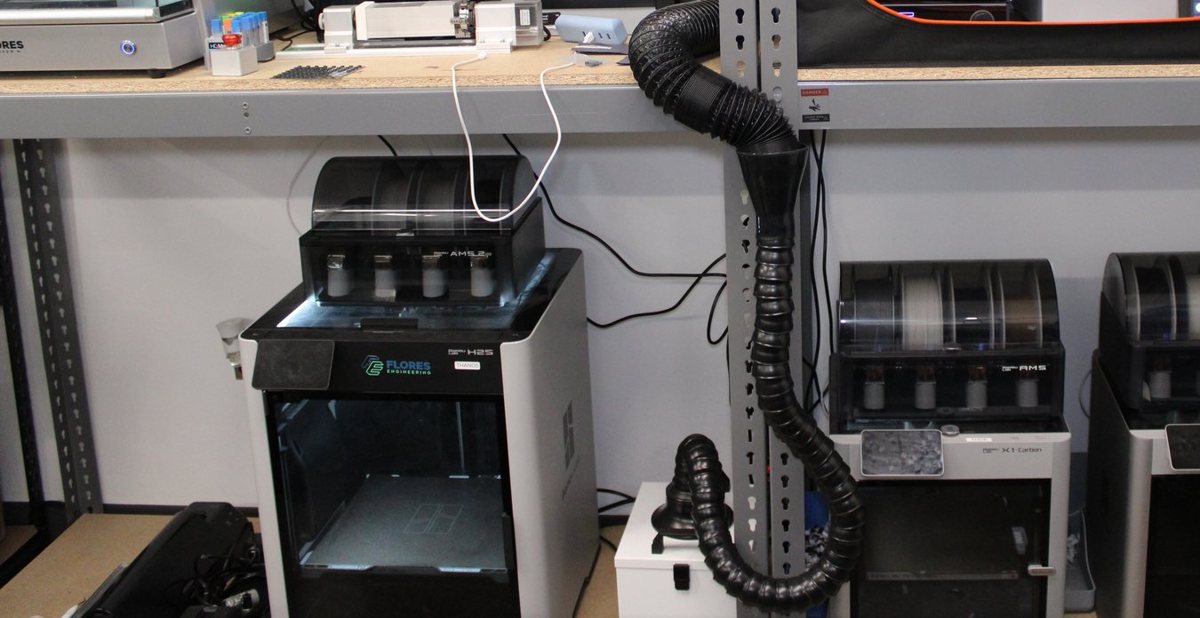
We run all three processes in our Kearny, NJ lab, so we have no reason to push one over another. This is the decision guide we use.
The short version
| FDM 3D printing | SLA resin printing | CNC machining | |
|---|---|---|---|
| Best for | Functional parts, fixtures, enclosures | Fine detail, smooth surfaces, clear parts | Real metal, tight tolerances, wear parts |
| Typical cost | From $0.25 per gram | By resin volume and print time | $55 per machine hour + $45 setup |
| Lead time | 2 business days | 3 business days | 5 business days |
| Max size (in-house) | 256 × 256 × 256 mm | 200 × 125 × 210 mm | 360 × 240 × 140 mm |
| Surface | Visible layer lines | Smooth, near injection-molded | Machined finish |
| Minimum order | $35 | $35 | $35 |
Choose FDM when the part has to work
FDM (fused deposition modeling) builds parts from melted plastic filament, one layer at a time. It is the cheapest and fastest way to get a part you can actually use: snap it onto a bracket, mount a board inside it, drop it on the floor.
- Fit checks and early form studies
- Fixtures, jigs and assembly aids for the shop floor
- Enclosures and housings for electronics
- Brackets and mounts that carry light loads
Material choice matters more than most people expect. PLA is fine for a fit check but softens in a hot car. PETG and ABS handle more heat and impact. Carbon-fiber nylon (PA6-CF) is stiff and strong enough for many end-use mechanical parts.
The trade-off is surface finish and accuracy. Layer lines show, and holes print slightly undersize. If a pin needs an exact fit, plan to ream or drill the hole after printing.
Choose SLA when it has to look right
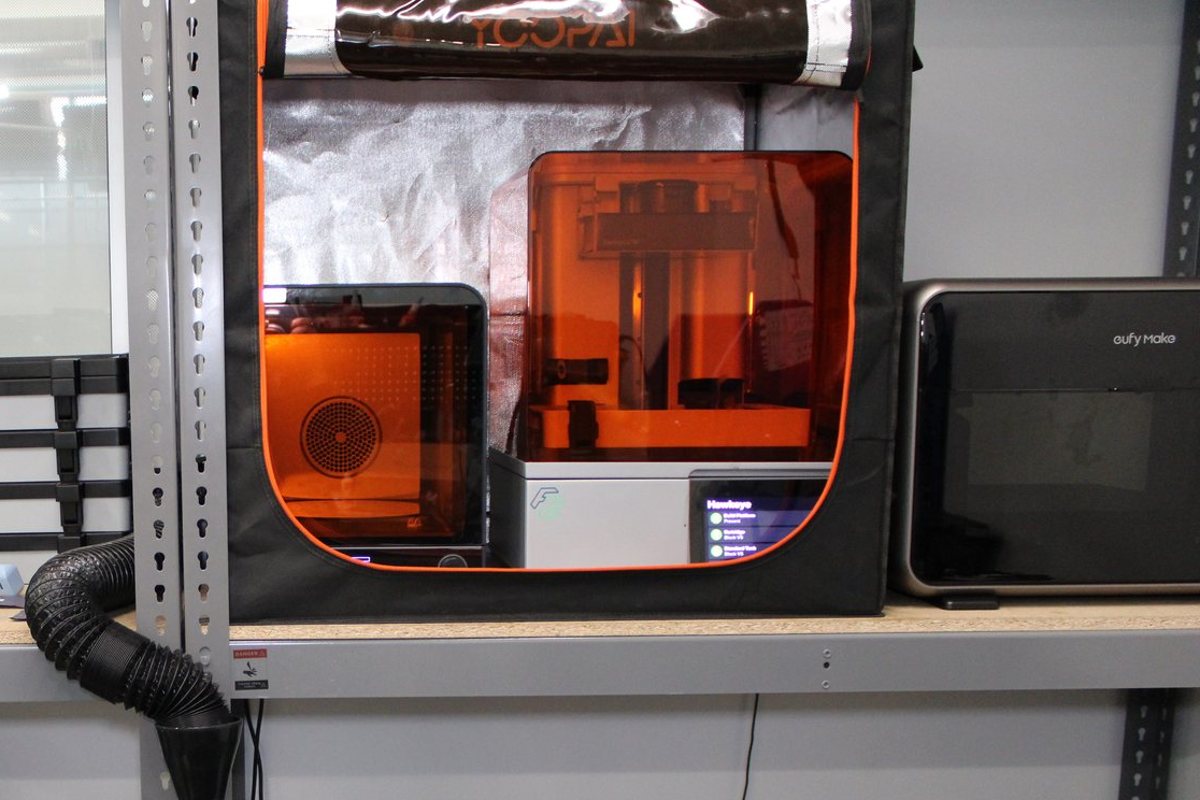
SLA (stereolithography) cures liquid resin with a laser. Parts come out smooth and detailed, close to what a molded part looks like. That makes SLA the right choice for appearance models, small detailed parts and anything transparent.
- Appearance prototypes for investor or retail demos
- Small parts with fine features, text or thin walls
- Clear parts: light pipes, windows, fluid views
- Patterns for silicone molds and casting
Standard resins are more brittle than FDM plastics, so they are not ideal for snap fits or parts that take impact. Engineering resins like Tough 2000 and Rigid 10K close much of that gap, at a higher material cost.
Choose CNC when it has to be real
CNC machining cuts the part from a solid block. You get the real material, aluminum, brass or Delrin, with real mechanical properties and tighter tolerances than printing can hold.
- Aluminum brackets, plates and small housings
- Parts that see heat, load or wear
- Bushings, slides and gears in Delrin
- Final validation parts that must match production material
Machining costs more per part and takes longer, mostly because of setup time and toolpath programming. It also has geometry limits: inside corners need a radius, and deep narrow pockets get expensive fast.
A simple rule of thumb
Ask what the prototype has to prove. If it proves fit and function, print it in FDM. If it proves appearance or fine detail, print it in SLA. If it proves strength, heat resistance or production-grade accuracy, machine it.
Most of our product development projects use all three at different stages. Early proof-of-concept builds are almost always FDM. Design-review models for founders and investors are often SLA. Engineering validation units mix printed housings with machined metal parts where loads are highest.
Design tips that save a reprint
- FDM: keep walls at least 1.2 mm thick and leave 0.2 mm clearance between mating parts.
- SLA: keep walls at least 0.6 mm and add drain holes to hollow parts.
- CNC: send a STEP file, not an STL, and add a drawing for tolerances tighter than ±0.1 mm or for threads.
Not sure which one fits? Pick "Not sure" when you upload your files and an engineer will recommend a process before anything is made.